City of the grey hill.
A Bronze Age capital of ancient Margiana in the eastern Karakum, with a palace, temples and a necropolis from the 3rd–2nd millennia BC.
Read the story ↓A temple city in the sands.
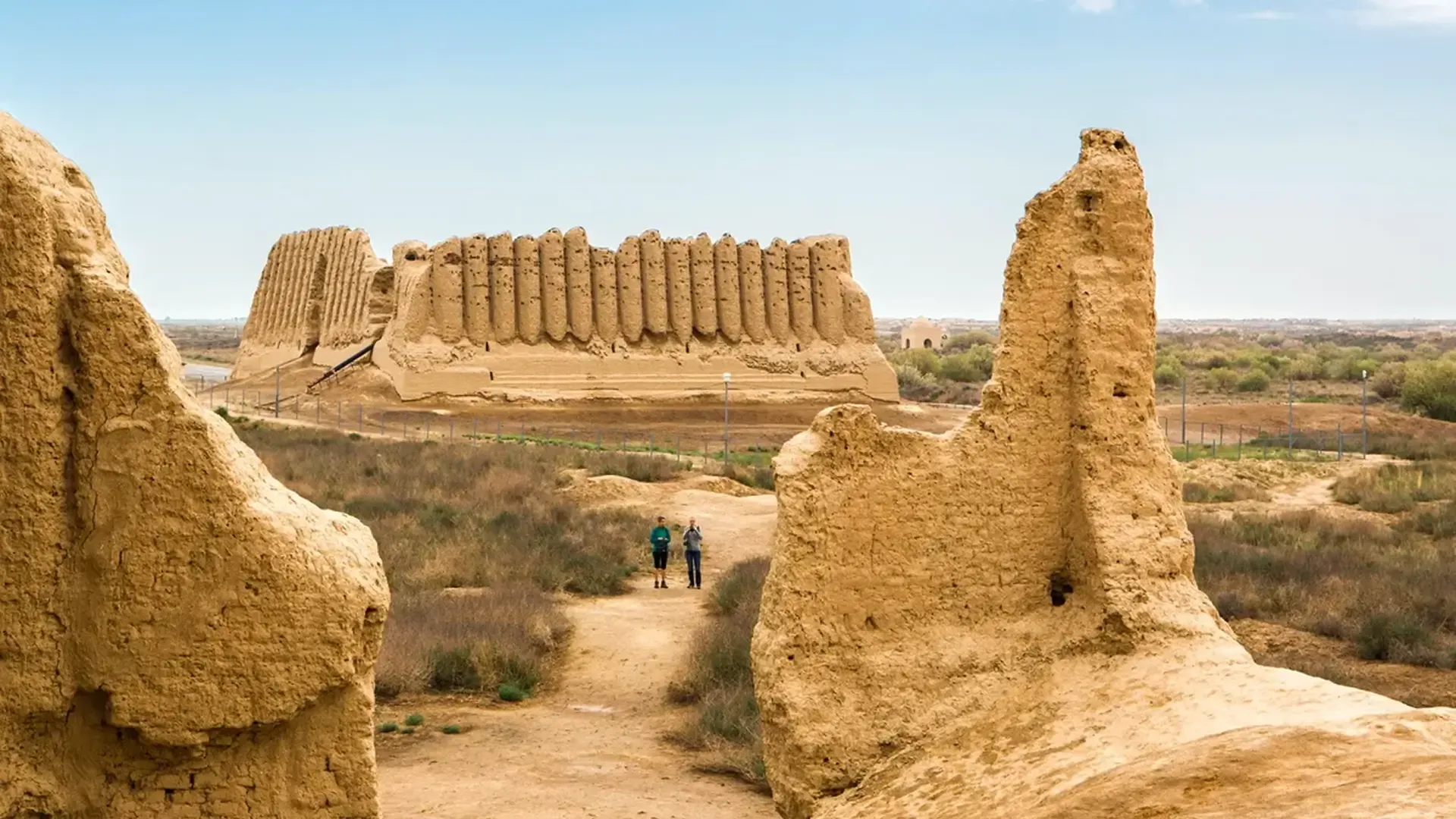
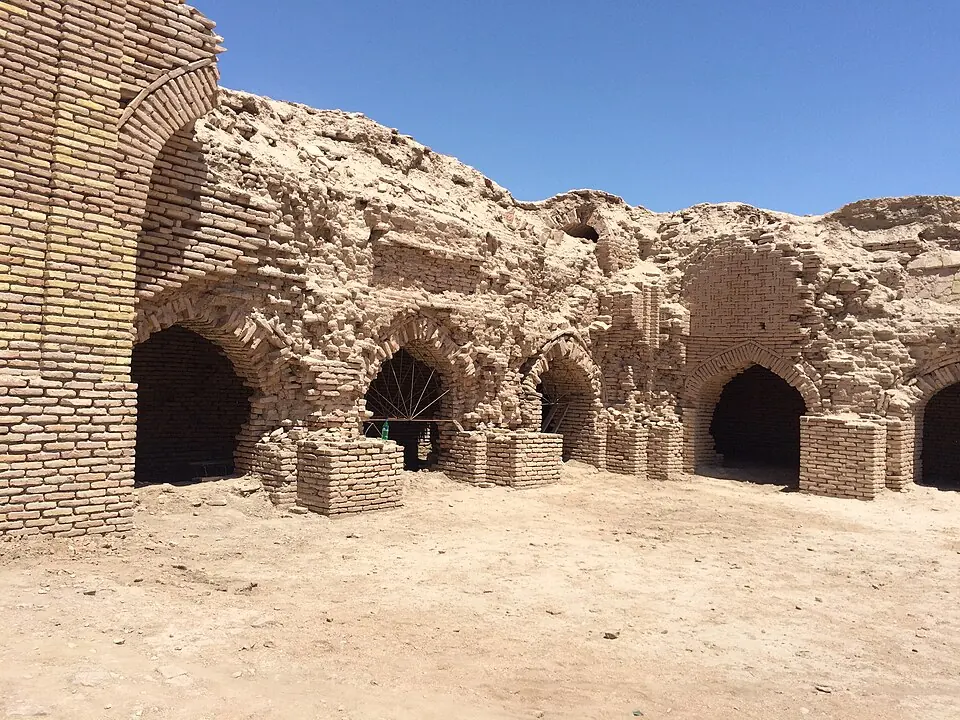
It was not long ago, in the 90’s, among the sands of the eastern Karakum desert, archaeology scientists discovered a huge necropolis dating back to the 3-2 millennia B.C. in the oasis of Mary. There was once a capital city, called today Gonur Tepe (translated from Turkmen as “Grey hill”) with its palace and few temples that could compete with erections of Assyria and Babylon. Excavations of this place led scientists and historians to amazing discoveries. The temple town kept its mysteries in the sands of the desert for several thousands of years. Gonur Tepe was the largest settlement in the entire Margiana. It was located on a small hill on the right banks of the riverbed of Murgab. Excavations continue up to now, and archeologists still do not know how big the area is. The preliminary data gives clue that the area of the ancient city ranges between 30 to 50 hectares (1 hectare = 10 000 square meters). This assumed “capital” did not have a ruler with definite commanding authorities, governing the entire country, but rather a spiritual leader – a supreme priest. People respected him unforced and only willingly, prompted by the faith.
Gonur Tepe is a capital temple city of the country Margush. Archaeologists managed to discover convincing facts of spiritual rituals and traditions proving that Gonurians believed in Zoroastriasm.
Architecture of Gonur Tepe
In the center of the town, there was a palace with many big rooms surrounded with strong, high walls – 6-7 meters in height. Scientists discovered that the temple was the center of social life of the capital. According to the excavations of this unique monument of ancient architecture, its area makes 3,5 hectares. There were few rooms and a main one with a square altar in the center of it. There were kept sacred fire and sacrificial animals. In addition, scientists discovered few ancient cemeteries. The largest one of them included 3 thousand burials.
The Big Gonur Necropolis
The most mysterious find of archeologists in Gonur Tepe was the royal tomb and a necropolis. The burial place was rather big for one person. It included 5 sepulchers for people and 3 for animals. According to the scientists’ assumption, this royal burial was for the ruler of the country and his family. The biggest sepulcher in the Necropolis was found by the expedition headed by Viktor Sarianidi. The burial refers to the middle of the 3rd millennium B.C. In the tomb, scientists found a chariot with four wheels that was supposed to transfer to the other world. There were mortal remains of seven people, seven dogs, two donkeys and two camels next to the chariot.
Number 7, corresponding to the seven deceased people and seven dogs killed in a special way as a sacrifice, was not chosen accidentally. Both ancient Zoroastrians and modern Turkmens considered digit 7 as sacred. Descendants of the ancient Gonurians still have strange attitude to dogs – they are respected and feared at the same time.
Among little items, archaeologists found a bronze lamp, two stone sticks with silver rings on its ends, a scoop, three bronze items, unique vessel that is almost one meter in height and consisting of seven ball-shape cisterns and a wide round-bottomed vessel.
Apart from the big foundation pit, there were found smaller burials, as well as some unusual things that scientists cannot give a clear explanation to. For instance, in one of the tombs, they discovered few stones done into smooth and even balls next to the ceramic dishes, and some pistachio shaped stones. It is still unknown what these items were made for and the role they carried out.
Necropolis of Gonur Tepe still holds many mysteries for historians, archaeologists and scientists. This place is one of the important touristic objects of Turkmenistan, visited by thousands of tourists every year. Discover this wonderful and mysterious sight to touch the secrets of Turkmens’ ancestors who were great and talented sculptors, builders and jewelers of the past.